Wedding Catering Styles Explained: Plated, Buffet, Stations or Family-Style?
The best wedding catering style is not the one that sounds most formal or appears least expensive on a package sheet.
It is the one that fits the guest count, venue, menu, timeline and atmosphere the couple wants to create. A plated dinner can feel elegant and controlled. A buffet can offer variety and flexibility. Food stations can make dinner feel interactive. Family-style service can create a warm, shared-table experience. Each option also changes staffing, rentals, room layout, service time, and the way guests move through the reception.
Use this guide to compare the major wedding catering styles before finalizing the menu:
Plated dinner
Best known for: formal service, composed presentation and strong portion control.
Watch for: entree selections, place-card indicators, service staffing and enough timeline for table-by-table service.
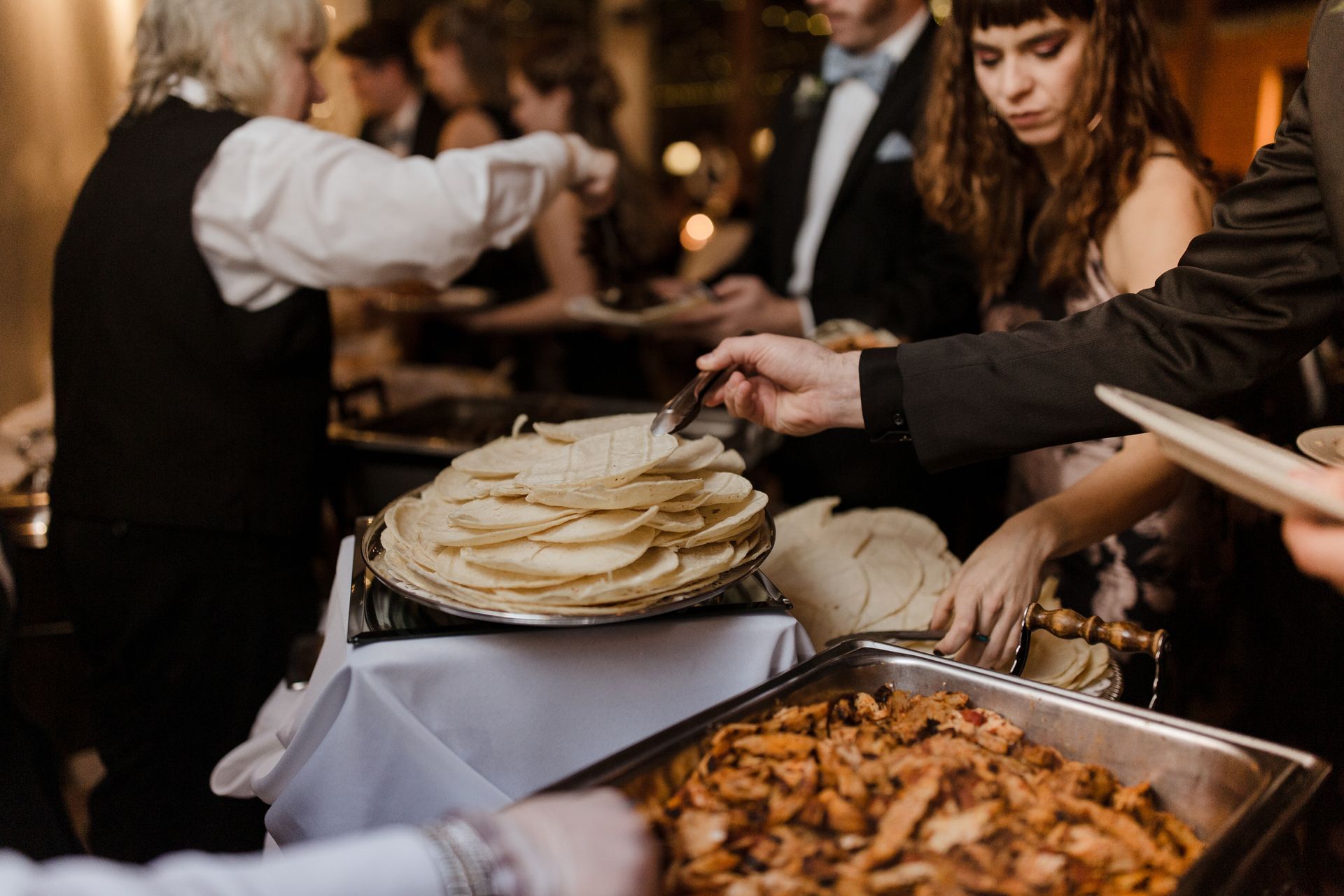
Buffet
Best known for: broad menu choice and a familiar guest experience.
Watch for: line length, buffet placement, food quantities, accessibility and the number of service lines.
Food stations
Best known for: variety, movement and an experience that becomes part of the reception.
Watch for: room footprint, signage, staffing, power and how guests are released to avoid congestion.
Family-style dinner
Best known for: shared dishes and an intimate table experience.
Watch for: table space, serving pieces, replenishment, dietary needs and clearing logistics.
Cocktail-style reception
Best known for: mingling, passed bites and a less traditional dinner structure.
Watch for: sufficient food, seating for guests who need it, pacing and clear expectations.
Plated wedding dinner
A plated dinner serves a composed meal to each guest at the table.
The format often works well for couples who want a structured reception, formal presentation and a clear sequence between dinner, speeches and dancing.
Advantages of plated service
- Guests remain seated during the meal
- Plates can be presented consistently
- Portions are controlled
- The reception timeline can be tightly coordinated
- Dietary and special meals can be delivered directly
- The room does not need buffet space
Planning considerations
A plated dinner typically requires more service labor than a basic buffet. The caterer needs enough staff to deliver meals while they are hot, clear courses and maintain water, bread and table service.
If guests choose entrees in advance, the couple needs a reliable selection process and a way to identify each meal at the table. That may involve place cards, escort cards or a seating chart with meal indicators.
The menu also needs to work at scale. Highly delicate preparations may not hold or travel as well as dishes selected specifically for event service.
A plated dinner may be a strong fit when:
- The couple wants a formal or traditional meal
- The timeline includes seated speeches or formalities
- The venue has limited room for buffets
- The guest list includes people who may have difficulty standing in line
- The caterer has a strong service team and kitchen plan
Wedding buffet
A buffet allows guests to select from a displayed menu and build their own plates.
It can feel relaxed, generous and flexible. It also allows couples to offer several entrees, sides and dietary options without requiring every guest to select a meal in advance.
Advantages of buffet service
- Guests can choose portions and combinations
- The menu can offer variety
- Advance entree selections may not be needed
- Dietary items can be grouped and labeled
- The format can support a broad range of wedding styles
Planning considerations
Buffet success depends on placement and release strategy. One short buffet for a large guest count can create a long line and delay dinner. The caterer may recommend a double-sided buffet, multiple identical lines or table-by-table release.
The buffet also uses room space. It needs access for guests, replenishment paths for staff and enough distance from the dance floor, doors and bars.
Buffets often require more food than plated service because guests choose their own portions and the display must remain full. That is one reason a buffet is not automatically less expensive.
A buffet may be a strong fit when:
- The couple wants menu variety
- Guests have diverse preferences
- The venue has enough room for efficient service lines
- The reception style is relaxed or flexible
- The caterer can build a clear release and replenishment plan
Wedding food stations
Food stations divide the menu into several service points. Examples may include carving, pasta, small plates, global menus, salads, comfort food, seafood, desserts or late-night favorites. Stations can make the meal feel like part of the entertainment. Guests move, explore and choose what interests them.
Advantages of food stations
- The menu can tell several culinary stories
- Guests can choose their own experience
- The format encourages movement and conversation
- Chef-attended stations add energy
- Stations can operate in phases or remain open for a longer period
Planning considerations
Stations require space, equipment and coordination.
Each station may need tables, heat, power, lighting, signage, plates, utensils and staff. A popular station can develop a line even when other stations are open. The room should allow guests to circulate without crossing the dance floor, blocking bars or interfering with service paths. The caterer should map the location and estimate the demand at each station.
Stations can also change the timeline. Couples may prefer an open dining window instead of one formal dinner start, but speeches and dances still need coordination.
Food stations may be a strong fit when:
- The couple wants an interactive reception
- The menu includes several cuisines or concepts
- The venue has multiple usable areas
- Guests enjoy movement and choice
- The budget can support the required equipment and staffing
Family-style wedding dinner
Family-style service places shared platters or bowls on each table for guests to pass and serve.
The format combines seated service with the warmth of a shared meal. It can feel generous, social and personal.
Advantages of family-style service
- Guests remain seated
- The meal encourages conversation
- Several dishes can be shared
- The presentation feels abundant
- It can bridge formal and relaxed wedding styles
Planning considerations
Table space is critical. Centerpieces, candles, glassware, bread, menus and shared platters all compete for space. The florist, rental company and caterer should coordinate the tabletop before the final design is approved. The caterer also needs a plan for portioning, replenishment, serving utensils and clearing. Dietary restrictions can be more complicated when dishes are shared, so separate meals may still be needed.
Family-style service can require substantial staff and food quantities. It should not be assumed to cost less than plated service.
Family-style may be a strong fit when:
- The couple wants a communal dinner feeling
- Tables are large enough for platters
- The menu works well for sharing
- Centerpieces are designed around service space
- Guests are comfortable passing dishes
Cocktail-style wedding reception
A cocktail-style reception uses passed hors d'oeuvres, displayed food, small plates and stations instead of a traditional seated dinner.
It can work well for urban venues, shorter receptions, nontraditional timelines or couples who want guests to mingle.
Advantages
- The event feels social and active
- The menu can include many small tastes
- The room can use mixed seating and lounge areas
- Food can be introduced in waves
- The format supports creative presentation
Planning considerations
Cocktail-style does not mean less food. Guests need enough quantity and variety to feel they received a complete meal. The caterer should plan the number of pieces, duration of service, substantial items and dietary options. Provide enough seating for older guests, pregnant guests, people with disabilities and anyone who does not want to stand for the full reception. Clearly communicate the format so guests know what to expect.
Is buffet or plated service cheaper?
A plated dinner may require more service staff. A buffet may require more food, buffet equipment and floor space. Family-style may use both significant labor and higher food quantities. Stations may require several chefs, attendants and power sources.
The complete cost depends on:
- Menu
- Guest count
- Staff hours
- Venue access
- Kitchen facilities
- Rentals
- Equipment
- Bar plan
- Timeline
- Setup and cleanup
Compare itemized proposals for the same wedding rather than relying on a general assumption.
Which service style is fastest?
Speed depends on the plan. A well-staffed plated dinner can serve a room efficiently. A buffet with several service lines can move quickly. A single buffet placed in a narrow area can create a delay. Stations can spread guests across the room, but one popular station may become a bottleneck.
Ask the caterer how long service will take for the specific guest count and layout. Then protect that time in the reception schedule.
How dietary needs affect the choice
Every service style can support dietary accommodations, but the process differs.
Plated
Special meals can be delivered directly, but the team needs accurate seating and meal indicators.
Buffet
Items can be labeled, but cross-contact and shared utensils require careful planning.
Stations
Separate concepts can make choices clear, but guests need signage and staff who can answer questions.
Family-style
Shared dishes can be harder to control. The caterer may prepare separate plated meals for certain guests.
Discuss allergies and medically necessary restrictions early. The couple should not promise a specific accommodation until the caterer confirms the process.
Let the venue influence the service style
The room should support the meal. A venue with a small dining room may favor plated service. A large open venue may support several stations. A historic property with limited kitchen access may require a menu and equipment plan designed for off-site preparation. A barn or outdoor property may need power, flooring, weather protection and a temporary kitchen.
Ask the caterer to review:
- Kitchen and prep areas
- Load-in distance
- Power and water
- Buffet or station placement
- Server paths
- Bar locations
- Table layout
- Outdoor weather plan
- Rental requirements
The service style should feel natural in the space, not forced into it.
Consider a hybrid approach
The wedding does not need to use one format from start to finish.
Examples include:
- Passed hors d'oeuvres followed by a plated dinner
- Displayed appetizers followed by a buffet
- Plated salad followed by stations
- Family-style dinner followed by a dessert station
- Plated dinner followed by a late-night snack bar
- Cocktail-style reception with one substantial chef-attended station
A hybrid approach can combine structure with variety. It can also add complexity, so the timeline, staffing and room layout should be reviewed as one system.
A decision framework for couples
Ask these questions:
1. How formal should dinner feel?
2. Do we want guests seated or moving?
3. How much menu choice do we want to offer?
4. Does the venue have room for buffets or stations?
5. Are there mobility or accessibility needs in the guest list?
6. Do we want advance entree selections?
7. How much dinner time fits the reception timeline?
8. What kitchen and power resources are available?
9. How will dietary meals be communicated and served?
10. What does the complete proposal include?
The caterer's recommendation should connect those answers to the menu, staff and floor plan.
Frequently asked questions
What is the best wedding catering style for a large guest count?
The best option depends on the venue and staffing plan. Multiple buffet lines, stations or a well-staffed plated dinner can all work. Ask the caterer to model service time and room flow.
Are food stations enough for dinner?
They can be, when the menu includes enough substantial food, variety and quantity. The caterer should plan the full meal, not only attractive small bites.
Do guests prefer buffet or plated weddings?
Guest preferences vary. Comfort, clarity, food quality and efficient service matter more than the label. Consider the age, mobility and expectations of the specific guest list.
Can family-style service work with elaborate centerpieces?
Only if the table has enough usable space. Coordinate platter size and placement with floral and rental plans before finalizing the design.
Do we need meal-selection cards for a plated dinner?
Often, yes, when guests choose entrees. The caterer may require counts and indicators that identify each selection at the table.
Choose the format that supports the celebration
The meal should not feel like a separate production inserted into the reception.
It should support the room, timeline, and atmosphere. The food should arrive at the right temperature. Guests should understand what to do. Lines should move. Staff should have clear paths. Dietary meals should reach the correct people.
When those pieces work together, plated, buffet, stations, and family-style service can all create an outstanding wedding dinner.