
How to Build a Wedding Guest List Before You Choose a Venue
The first major wedding decision is not the venue, the dress, or the photographer. It is the guest list.
You do not need a final invitation list before touring venues. You do need a credible estimate of how many people you may invite and how many may attend. Without that range, it is difficult to compare capacity, catering proposals, bar packages, rentals, transportation or the total budget.
A wedding for 80 guests and a wedding for 180 guests are different events. The same venue may not work for both. The same menu may require a different service plan. The same design concept may need more tables, centerpieces, linens and labor.
The goal is not to predict every RSVP. The goal is to create a planning number you can defend.
Start with names, not a round number
Many couples begin by saying, "We want about 150 people."
That sounds helpful, but it often falls apart once both families start naming people. A real guest list is easier to manage than an abstract number.
Write down the names you believe you may invite. Organize the list into groups:
- Couple's immediate and extended family
- Partner's immediate and extended family
- Mutual friends
- Individual friend groups
- Coworkers and professional relationships
- Parents' family friends
- Children
- Plus-ones
- Community, school or faith relationships
Names reveal the real size of the wedding. They also reveal the decisions that need to be made.
Use four different guest-count numbers
One number cannot do every job. Use four.
1. Invitation ceiling
This is the maximum number of invitations you may send if the list is not reduced.
The invitation ceiling helps you understand the largest event you may be planning. It should include likely plus-ones and children if those groups may be invited.
2. Working attendance estimate
This is the number you believe may realistically attend.
A starting buffer of roughly 20 to 40 fewer people than the invitation ceiling can be useful for some weddings, but it is not a guaranteed decline count. A local guest list may behave differently from a destination-heavy list. A holiday weekend may behave differently from an ordinary Saturday. Family structure, travel distance and guest age also matter.
For example, a list of 180 invitations might produce a working estimate of 140 to 160. That is a planning range, not a promise.
3. Comfortable budgeted guest count
This is the number your current budget can support without depending on a large number of declines.
It helps answer an important question: if nearly everyone accepts, can the wedding still be funded comfortably?
If the invitation ceiling is much higher than the budgeted count, the couple should reduce the list, increase the budget or choose a format that can absorb the difference.
4. Venue capacity target
This is the guest count the venue must hold comfortably with your actual layout.
Do not confuse the legal occupancy number with the number that works for a seated reception. A room may hold more people for a standing cocktail event than it can hold for dinner and dancing.
Have the family conversation before the venue tour
Guest lists become stressful when decision rights are unclear.
Before touring venues, discuss:
- Who can add names to the list?
- Who makes the final decision?
- How many invitations does each set of parents control?
- Are children invited?
- Which guests receive plus-ones?
- Are coworkers included?
- Are family friends included?
- Is there an absolute invitation ceiling tied to budget or venue size?
- Which guests are likely to travel?
- Are there religious or cultural expectations that affect the list?
Parents and family members may be contributing financially or helping plan. Their input can be valuable. The problem comes when expectations are not made visible until after a venue has been booked.
A written list turns a vague conflict into a specific conversation.
Decide how you will handle plus-ones
Plus-ones can change the count quickly.
Create a consistent policy. Common approaches include:
- Spouses, fiancees and long-term partners are named guests
- Wedding-party members receive a guest
- Guests who will not know many people receive a guest
- All single adults receive a guest
- Plus-ones are limited based on capacity
There is no universal rule that fits every wedding. Consistency and clear communication matter.
If a plus-one is likely, include that person in the invitation ceiling even if the name is not known yet.
Decide how you will handle children
Children affect more than the head count.
The decision may influence meals, seating, high chairs, entertainment, transportation, hotel needs and the tone of the event. Decide whether the wedding will be:
- Adults only
- Immediate-family children only
- Children of the wedding party only
- Open to all invited families
Make the rule before invitations are designed. Use clear wording on the invitation and wedding website.
Match the guest list to comfortable venue capacity
A venue's listed capacity is a starting point, not the final answer.
Ask the venue to show a floor plan for your expected guest count and service style. The plan should include:
- Guest tables and chairs
- Dance floor
- DJ or band footprint
- Bars
- Buffet or food stations
- Cake or dessert display
- Gift and card table
- Photo booth
- Lounge furniture
- Large floral or decor installations
- Accessible routes
- Space for servers and guests to move
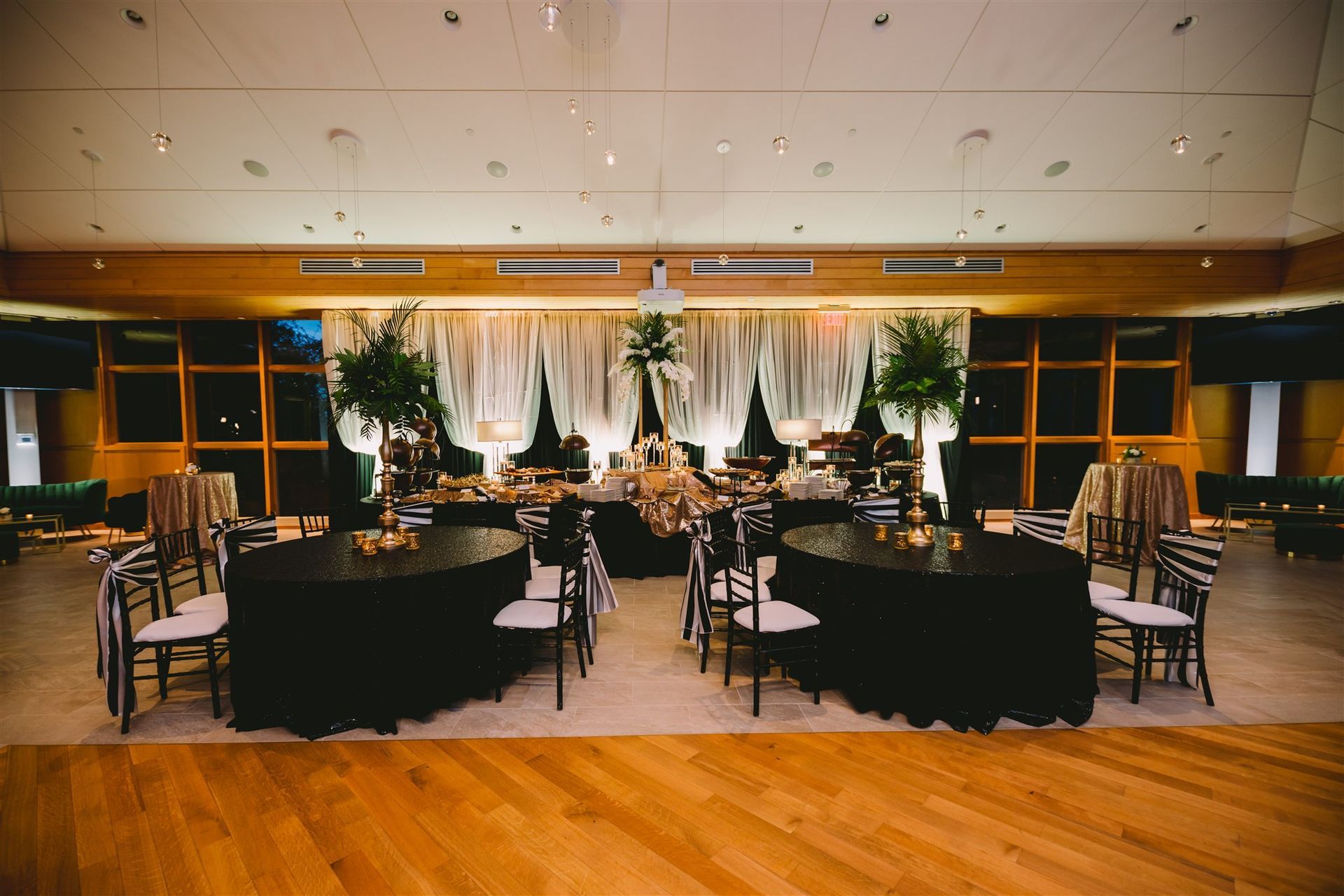
A room can technically fit the tables and still feel crowded. Guests need space to pull out chairs, reach the bar, visit food stations and move between rooms. Service staff need safe paths to carry trays and clear tables.
Comfortable capacity is the number that allows the event to function.
Consider ceremony capacity separately
The ceremony and reception may have different limits.
An outdoor ceremony area may hold the full guest list while the indoor rain plan does not. A historic property may offer a beautiful ceremony room with fewer seats than the reception room. A venue may rely on a room flip that requires guests to move through a narrow transition.
Ask:
- Can the ceremony hold the invitation ceiling?
- Can the indoor rain plan hold the same number?
- Is every seat usable with a clear view?
- Are accessible seats available?
- How much time is needed for a room flip?
- Where do guests go during the transition?
The rain plan should be a real plan, not a smaller space that works only if many guests decline.
Understand how guest count affects catering
Guest count does not only multiply the food cost.
It may also change:
- Number of servers, bartenders and captains
- Number and length of buffets or food stations
- China, glassware, flatware and linen quantities
- Bar inventory and ice
- Kitchen equipment and staging space
- Number of tables and centerpieces
- Vendor meals
- Setup and cleanup labor
- Transportation capacity
- Stationery and postage
- Gratuity assumptions
A change of 20 guests can move several categories at once. When the list changes materially, update the whole budget, not just the catering line.
Build the list in tiers without treating people like backups
Some couples need to prioritize invitations because the first draft is larger than the venue or budget.
A useful method is to group guests by relationship, not by how quickly you think they will respond.
For example:
- Essential: people you cannot imagine celebrating without
- Important: meaningful relationships you actively want present
- Extended: guests you would enjoy inviting if space and budget allow
This is an internal planning tool. It should not create a rushed second wave of invitations that makes guests feel like replacements.
Set the ceiling before save-the-dates are sent. Once guests have been told to reserve the date, the couple should plan as though they may attend.
Common guest-list mistakes
Booking a venue based on expected declines
Do not sign for a space that cannot hold your realistic high-end count unless you are prepared to reduce invitations before save-the-dates.
Forgetting unnamed guests
Plus-ones, children and family expectations can add dozens of seats. Include them in the ceiling.
Using the venue's maximum without testing the layout
Maximum capacity may not include the dance floor, buffet, band, photo booth or other features you want.
Letting every family member add names without a limit
Give each person a defined number or require that every addition be balanced by a removal.
Treating guest count as a catering-only number
It affects rentals, decor, transportation, stationery, staffing and the final timeline.
Waiting too long to discuss travel
A large out-of-town group may require hotel blocks, shuttles, welcome information and a different RSVP timeline.
A practical guest-list worksheet
Before touring venues, write down:
- Invitation ceiling: __________
- Working attendance estimate: __________
- Comfortable budgeted guest count: __________
- Venue capacity target: __________
- Ceremony capacity target: __________
- Estimated children: __________
- Estimated plus-ones: __________
- Estimated out-of-town guests: __________
Then ask each venue to show how that count works in the room.
Frequently asked questions
How many wedding guests should we invite?
Invite the people who fit the couple's priorities, budget and venue capacity. Start with names, then compare the total with what the event can comfortably support.
How many invited guests will decline?
There is no reliable universal number. A 20 to 40 person buffer can be useful for some early estimates, but travel, date, season and guest makeup can change the result. Do not rely on declines to make an undersized venue work.
Should the venue fit our invitation ceiling or expected attendance?
The venue should support the realistic high end of the list unless invitations will be reduced before save-the-dates. Use the working estimate for budgeting, but protect against a stronger-than-expected acceptance rate.
What if our guest list grows after we book the venue?
Return to the list and identify who has final decision authority. Do not assume the room can absorb more tables. Ask the venue and caterer to review the floor plan, service style and staffing impact before adding invitations.
Can a smaller venue make a wedding feel more intimate?
Yes, when it fits the count comfortably. A room that is too large may need design, lighting or layout changes to feel warm. A room that is too small creates operational problems that decor cannot solve.
Let the guest list guide the search
The venue should fit the people, not force the people into an arbitrary number.
Build the names. Set an invitation ceiling. Create a working estimate. Confirm the budgeted count. Then search for a venue that works with the real ceremony, dinner service, dance floor, and guest movement you want.
That single step improves every proposal that follows.